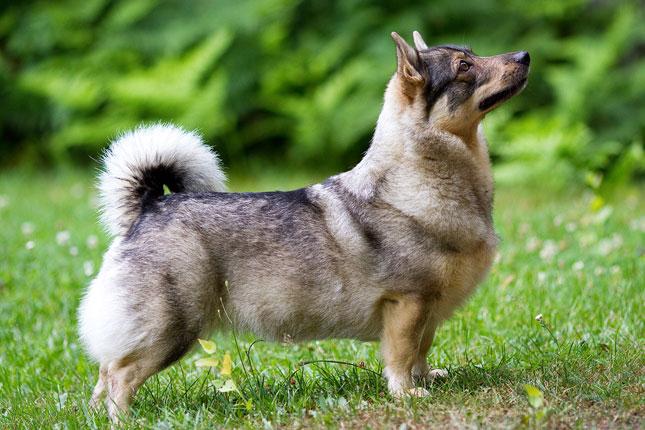
Västgötaspets; a small Viking herding dog with endless energy!
At first glance, the Västgötaspets may resemble a small wolf or a compact corgi. However, behind its alert expression lies one of Sweden’s oldest and most hardworking breeds. Also known as the Swedish Vallhund, this lively dog combines intelligence, endurance, and loyalty. As a result, it excels both as a working dog and as an active family companion.
Description
- Small, sturdy, and athletic dog
- Fox-like head with a keen expression
- Medium-length muzzle and erect ears
- Dense, weather-resistant double coat
- Height at the withers: 31 to 35 cm
- Weight: 9 to 14 kg
- Average lifespan: 14 to 15 years
 Ancient origins of the Västgötaspets
 Ancient origins of the Västgötaspets
The Västgötaspets is considered one of Scandinavia’s oldest native breeds. Its origins date back more than a thousand years, to the time of the Vikings. In fact, many historians believe that Viking dogs played a key role in shaping this breed, which was primarily used to herd cattle and guard farms.
For centuries, Swedish farmers relied on the Västgötaspets to move livestock efficiently. Thanks to its low stature, it could nip at the heels of cattle while avoiding kicks. Consequently, it became an indispensable working partner in rural life. Here’s more about it.
A breed saved from extinction
By the early 20th century, the Västgötaspets had nearly disappeared. However, in the 1940s, dedicated Swedish breeders rediscovered a few remaining dogs and began a careful breeding program. As a result, the breed was saved and officially recognized, allowing it to regain its rightful place among Nordic dogs.
Today, although still rare outside Scandinavia, the Västgötaspets continues to gain admiration worldwide.
Physical characteristics of the Västgötaspets
General appearance:
A compact, powerful, and agile dog built for endurance rather than speed.
Head:
Wedge-shaped and well-proportioned, with a moderately broad skull.
Eyes:
Medium-sized, oval, and dark, giving an alert and intelligent expression.
Ears:
Medium-sized, pointed, and firmly erect, always attentive to surroundings.
Muzzle:
Moderate in length, tapering slightly toward the nose.
Neck:
Strong and well-muscled, flowing smoothly into the shoulders.
Body:
Slightly longer than tall, with a straight back and well-developed chest.
Legs:
Short but powerful, allowing excellent balance and agility.
Feet:
Oval and compact with strong pads.
Tail:
Naturally long, short, or bobtail, all variations accepted.
Coat:
Double coat with a harsh outer layer and dense undercoat, offering excellent protection against harsh weather.
Color:
Shades of gray, red, or sable, often with lighter markings on the muzzle, chest, and legs.
Temper
Positive traits
- Extremely intelligent
- Energetic and enthusiastic
- Loyal to its family
- Alert and responsive
- Hardworking
- Confident
Negative traits
- Can be vocal
- Needs mental stimulation
- Strong herding instincts
 A tireless working dog
 A tireless working dog
Above all, the Västgötaspets thrives on activity. It loves having a task to complete and quickly becomes bored without stimulation. Therefore, it excels in dog sports such as agility, obedience, and herding trials. Moreover, its sharp mind allows it to learn commands rapidly.
Loyal and family-oriented
Despite its working background, the Västgötaspets forms strong bonds with its family. It enjoys being involved in daily life and prefers companionship over isolation. As a result, it does not tolerate being left alone for long periods.
Intelligent but strong-willed
Although highly trainable, this breed also has an independent streak. For that reason, training must remain consistent, engaging, and positive. Harsh corrections will only reduce motivation, whereas reward-based methods produce excellent results.
Västgötaspets with children
Generally speaking, the Västgötaspets gets along well with children. Its playful nature makes it an enthusiastic companion. However, because of its herding instincts, it may try to nip at heels during play. Early training and supervision easily correct this behavior.
 Health: a hardy Nordic dog
 Health: a hardy Nordic dog
The Västgötaspets is known for its robust health and longevity. Nevertheless, responsible breeding and regular veterinary care remain essential.
Possible concerns include:
- Hip dysplasia (rare)
- Eye conditions
- Back issues in older dogs
Daily routine of the Västgötaspets
- High energy level
- Needs daily physical and mental exercise
- Enjoys long walks and active play
- Highly alert and vocal
- Not suited to sedentary lifestyles
- Purchase price: moderate
Unlike more laid-back breeds, the Västgötaspets requires regular activity. Therefore, it suits active owners who enjoy outdoor life.
 Diet
Diet
 Diet
DietA balanced, high-quality diet adapted to an active medium-small breed is essential. Meals should be divided into two portions per day. Furthermore, portion control helps prevent unnecessary weight gain.
Living space
Although adaptable, the Västgötaspets prefers a house with access to outdoor space. That said, it can live in an apartment if exercised sufficiently. Without enough activity, however, boredom-related behaviors may appear.
Grooming the Västgötaspets
Fortunately, grooming remains simple:
- Brush once or twice per week
- Increase brushing during shedding seasons
- Bathe only when necessary
- Regular ear and dental care
Thanks to its weather-resistant coat, dirt rarely sticks for long.
 Does a Västgötaspets come trained?
 Does a Västgötaspets come trained?
Absolutely not. Like all intelligent working dogs, the Västgötaspets requires early training and socialization. However, once guided properly, it becomes a responsive, reliable, and deeply devoted companion.
Energetic, intelligent, and deeply loyal, the Västgötaspets is a small Viking dog with a powerful personality and an unstoppable work ethic.
Check out the Volpino Italiano breed, a dog breed even more rare and requiring less exercising!